
One Fire, Many Stories
A fire breaks out in downtown Port of Spain.
Most people see flames, smoke, maybe a dramatic photo shared online within seconds. Someone presses record on their phone and declares, “Boy, the fire breakout.” The clip circulates. The moment is captured. The internet moves on.
But Julian Rogers sees something else.
He sees the workers standing outside the building wondering if they still have jobs tomorrow. He sees customers suddenly cut off from a business they rely on. He sees firefighters discovering that a hydrant isn’t working, or that their ladder is too short. He sees insurers, government agencies, families, and an economy quietly absorbing shockwaves long after the flames are out.
To Rogers, a fire is never just a fire. It’s a story firing off “in many directions like fireworks.”
That distinction between capturing an event and truly reporting it is at the heart of his philosophy on storytelling in journalism.
Storytelling Is Not Decoration, It’s Responsibility
Storytelling is often treated as something journalists add to news: a narrative flourish, a human interest angle, a stylistic choice. But according to Julian Rogers, one of the Caribbean’s most respected journalism voices, storytelling is not optional. It is the work.
In a wide-ranging reflection drawn from decades of regional and international journalism, Rogers argues that every news event contains multiple stories, multiple stakeholders, and long-term consequences that demand careful, verified, and sensitive reporting.
In this article, you’ll learn:
- Why no news event exists in isolation
- How identifying stakeholders transforms reporting
- Why verification is the backbone of storytelling
- How responsible storytelling serves both the present and the historical record
Whether you’re a journalist, content creator, or communicator, Rogers’ insights offer a masterclass in seeing beyond headlines and telling stories that actually matter.
Primary Topics
1. Every News Event Has Multiple Stakeholders
One of Rogers’ most powerful ideas is deceptively simple: every story affects more people than you think.
Using the example of a downtown fire, he walks through a mental checklist journalists should instinctively run:
- Who owns the business?
- Who works there?
- Who depends on it as customers?
- What emergency services are involved?
- What systems failed or succeeded?
- What economic consequences follow?
Each group represents a different angle, a different truth, and a different responsibility for the journalist.
When reporting stops at “There was a fire,” it misses the real story. Journalism, in Rogers’ view, is about mapping the ripple effects and understanding how one moment connects to lives, systems, and institutions.
This stakeholder mindset turns a single event into a layered narrative that reflects reality rather than spectacle.
2. Storytelling Is Structure, Not Sentiment
Rogers pushes back against the idea that storytelling is about emotion alone. Instead, he emphasizes that the core elements of storytelling have never changed:
- Something happened
- Why it happened
- Who it affected
- What it means beyond the moment
These questions mirror the oral traditions of the Caribbean, where calypsonians acted as early storytellers and social commentators long before news anchors existed.
In that sense, journalism didn’t invent storytelling. It inherited it.
What distinguishes good journalism is not drama, but structure. A story that follows these elements allows the audience to understand context, consequence, and cause, not just consume information.
3. Why Verification Is the Story
Perhaps Rogers’ strongest critique is aimed at speed-driven reporting.
He recalls stopping an experienced journalist from going live at a fire scene because the reporter hadn’t spoken to anyone. No fire officers. No business owners. No workers. No witnesses.
“What could he tell me?” Rogers asks.
Without verification, reporting collapses into speculation. Journalism becomes performance rather than service.
Rogers draws a sharp line between citizen footage and journalism:
- Anyone can record an event
- Journalists must verify it
Verification means:
- Speaking to authorities
- Confirming timelines
- Distinguishing fact from rumor
- Acknowledging what is not yet known
In a world flooded with instant content, Rogers insists that accuracy, not immediacy, is what gives journalism its value.
4. Sensitivity Is a Professional Skill
Another pillar of Rogers’ storytelling philosophy is do no harm.
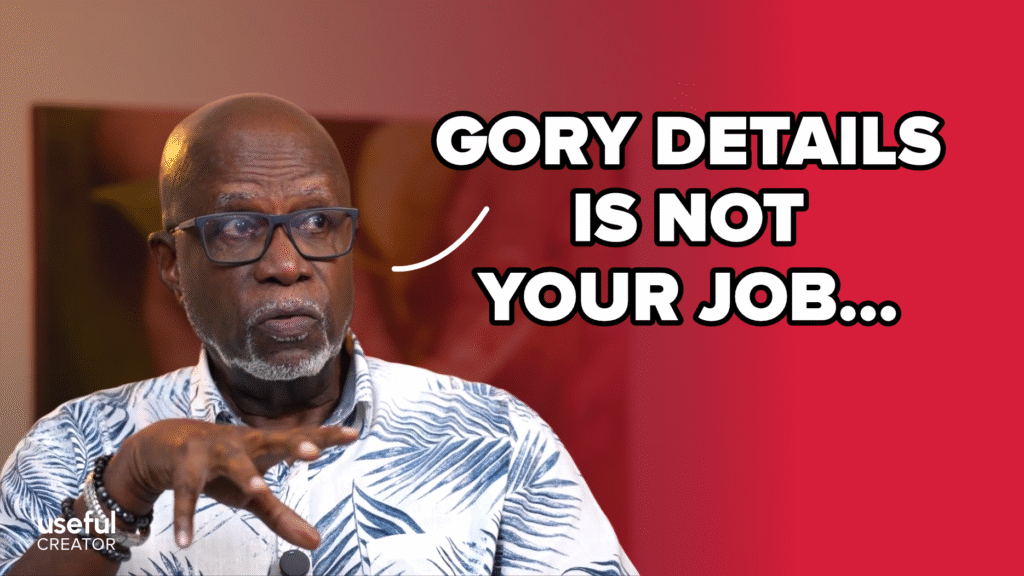
He is unequivocal: the public’s appetite for gory details is not the journalist’s responsibility to satisfy.
There are ethical boundaries:
- You don’t show faces of victims lying in the road
- You don’t interview children indiscriminately
- You don’t thrust microphones into grieving families
But sensitivity does not mean silence.
A journalist can still report:
- That a family is grieving
- That a home was lost
- That people are displaced
The difference lies in how the story is told. Ethical storytelling respects dignity while still informing the public. This balance between truth and compassion is what separates responsible journalism from exploitation.
5. Journalism as a Catalyst for Help
One of the most overlooked roles of storytelling, according to Rogers, is its ability to mobilize assistance.
When journalists report specifics, children needing school supplies, families lacking housing, workers suddenly unemployed, they create pathways for help. Not just from government agencies, but from ordinary people who care.
Sometimes help arrives quietly. No cameras. No press releases. Just action.
That is journalism doing its job, not just recording tragedy, but enabling recovery.
6. Reporting for the Historical Record
Finally, Rogers reminds us that journalism is not only for today.
Stories become records.
Decades from now, someone should be able to look back and understand:
- What happened
- Why it happened
- Who was affected
- What was done in response
That responsibility demands care, accuracy, and depth. When journalists rush, speculate, or oversimplify, they don’t just misinform the present, they distort the future.
Re-Summarizing the Point
Julian Rogers’ core message is clear: a news event is never just an event.
True storytelling in journalism means:
- Seeing beyond the obvious
- Identifying all stakeholders
- Verifying before speaking
- Reporting with sensitivity
- Understanding long-term impact
For readers, creators, and journalists alike, this approach builds trust, clarity, and relevance. It transforms news from fleeting content into meaningful public service.
Listen to the Full Conversation
This article captures only a portion of the depth shared in the full mini podcast episode of Useful Creator.
In the complete conversation, Julian Rogers reflects on:
- Decades of journalistic experience
- The difference between reporting and reacting
- The cultural roots of storytelling in the Caribbean
- The ethical responsibilities journalists carry
If you care about storytelling, journalism, or how information shapes society, this episode is essential listening.
Listen to the full podcast episode to hear Julian Rogers explain, in his own words, why getting the story right matters, now and for generations to come.
Because when journalism is done well, it doesn’t just inform.
It serves.